
Polishing Services
Our precision-focused as-machined services deliver custom parts with surface finishes ranging from Ra 0.4μm to Ra 3.2μm without additional finishing operations—manufactured exactly to your specifications.
Polishing Surface Finish Specifications
| Polishing Grade | Surface Roughness | Applicable Materials | Visual Appearance |
|---|---|---|---|
| Basic Polishing | 0.4μm - 0.8μm | Metals, Plastics | Smooth, uniform surface with soft, diffused luster. No distinct mirror reflection. Reduces machining marks to create professional matte/satin appearance. |
| Fine Polishing | 0.1μm - 0.4μm | Metals | Highly smooth, semi-bright surface with clear reflectivity. Visible reflections but not perfect mirror clarity. Professional, high-quality aesthetic. |
| Mirror Polishing | ≤ 0.1μm | Metals | Mirror-like, brilliant surface with sharp, undistorted reflections. Near-optical quality finish that clearly reflects images with minimal visible imperfections. |
Polishing Service Process Finish Overview

Polishing is a precision surface finishing process that smooths and refines CNC machined and sheet metal components through controlled mechanical material removal. Using progressively finer abrasive media—including belts, wheels, and buffing compounds—this process systematically eliminates tool marks, machining lines, scratches, and surface irregularities left by fabrication operations.
The result is a consistently smooth surface with enhanced visual appeal and improved tactile quality, ranging from subtle satin finishes to brilliant mirror-like reflectivity. Polishing transforms functional machined parts into premium-quality components suitable for customer-facing applications where surface characteristics directly impact product perception and performance.
Polishing Surface Finish Overview
Advantages of Polishing Surface Treatment
Transforms machined parts from industrial to premium quality, elevating perceived product value for customer-facing applications in consumer electronics, medical devices, and automotive interiors.
Minimizes surface friction coefficients for sliding components and seals while resisting dirt accumulation, making parts easier to clean and maintain in food equipment and medical applications.
Removes micro-pits and surface irregularities where corrosion initiates, enabling more uniform passive oxide layers that significantly extend service life versus as-machined finishes.
Provides ideal substrate for anodizing, plating, and powder coating, promoting uniform coating thickness and improved adhesion while reducing finishing defects and rejection rates.
Eliminates micro-defects like tool chatter marks that create stress concentration points, improving fatigue resistance in cyclically loaded components and reducing premature wear in friction applications.
Design Considerations for Optimal Polishing Results
Stainless steel (304, 316), aluminum alloys (6061, 7075), brass, and copper polish to brilliant finishes. Cast alloys, very hard materials (>50 HRC), and soft plastics have limited polish response. For mirror finishes, specify wrought alloys rather than castings.
Large flat surfaces, external cylinders, and gently curved features polish most effectively. Deep cavities, sharp internal corners, narrow slots, and complex 3D surfaces present challenges. Consider increasing fillet radii or designing multi-piece assemblies for optimal results.
Polishing enhances existing surface quality but cannot eliminate deep defects. Starting surface condition directly impacts final polish grade achievable. Premium machining parameters with minimal tool deflection produce best mirror polish results.
Polishing removes minimal material per surface depending on grade. For tight tolerances, add polishing allowance to machined dimensions and specify "dimensions shown are after polishing" on drawings to ensure final dimensions meet requirements.
Specify polish grade with surface roughness values or provide reference samples. Avoid vague terms and include specific requirements such as selective polishing zones when only certain surfaces require finishing.
Custom Polishing Surface Finish Part Made Simple
Our ordering process
Request for quote
Share project details for competitive pricing
Quote and design analysis
Detailed quote with design evaluation
Production
Precision manufacturing with advanced CNC systems
Quality control
Rigorous inspections ensure specifications
Delivery
Reliable shipping worldwide
About Us

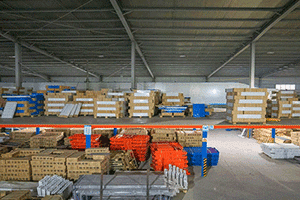
Since 2012, we've been at the forefront of CNC machining, initially specializing in manufacturing precision molds and evolving to provide comprehensive in-house production of machined parts. This journey has allowed us to complete over 1270 custom projects, equipping us with extensive experience in overcoming diverse machining challenges. We continuously refine our techniques, ensuring optimal quality for every component.
Our Commitment to Your Success:
-
17+ Years of Expertise: Our deep specialization in machining production across various industries enables efficient problem-solving and innovation.
-
Self-Owned Workshop: Our in-house machining facility significantly shortens production cycles and reduces your procurement costs by at least 10%.
-
Unwavering Confidentiality: We prioritize the utmost confidentiality for your designs and intellectual property, always signing protection agreements.
-
Real-Time Order Tracking: Stay informed with continuous production updates throughout your order's journey.
Factory Photo




 English